RESEARCH LAYER
CONDITIONAL VIEWStructural thesis
State what the evidence supports—and the market structure beneath it.
 PUBLISHED MARKET INTELLIGENCE
LOGOS publishes the thesis, counter-evidence, invalidation and decision frame together—then returns later to compare what was expected with what actually followed.
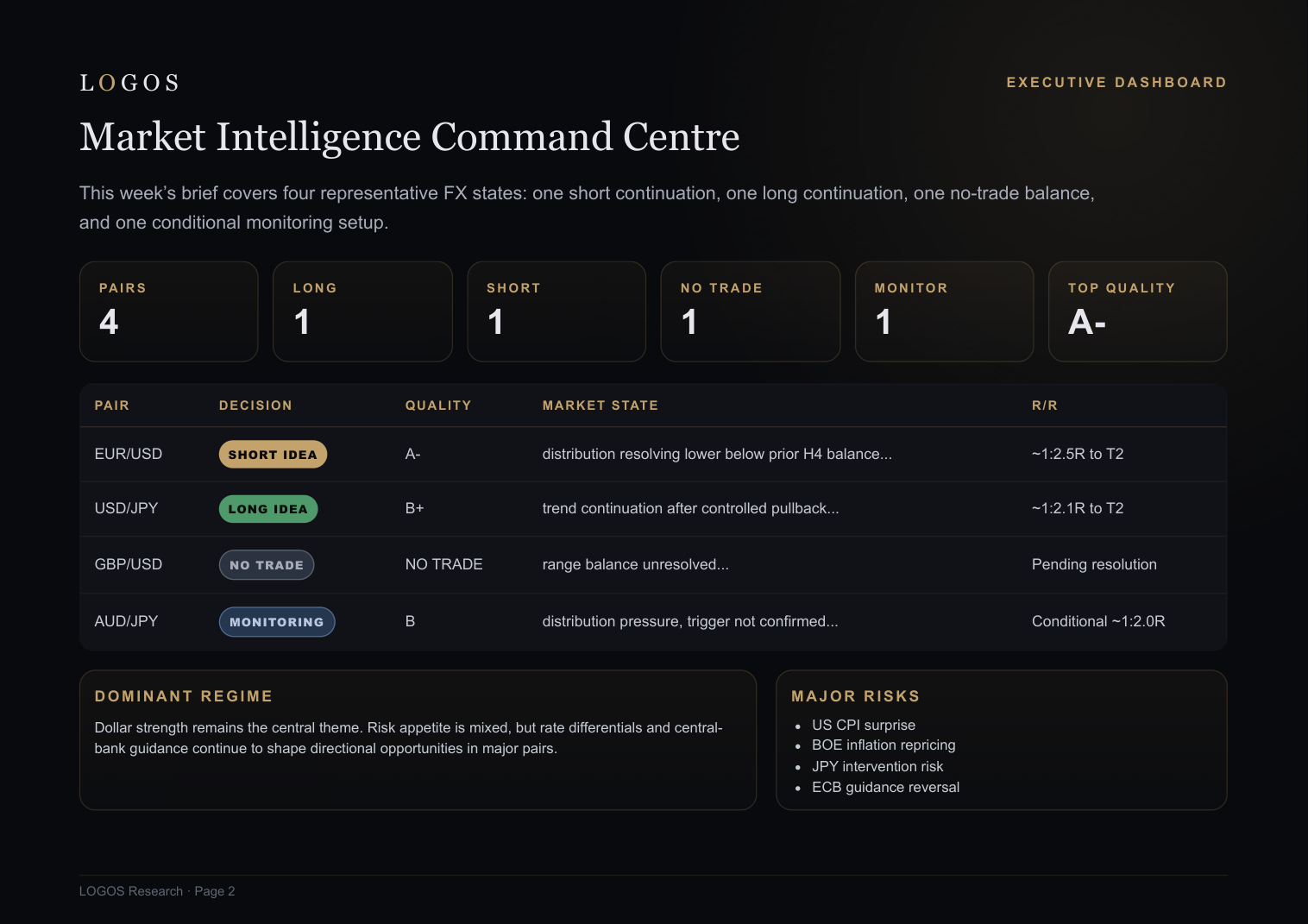
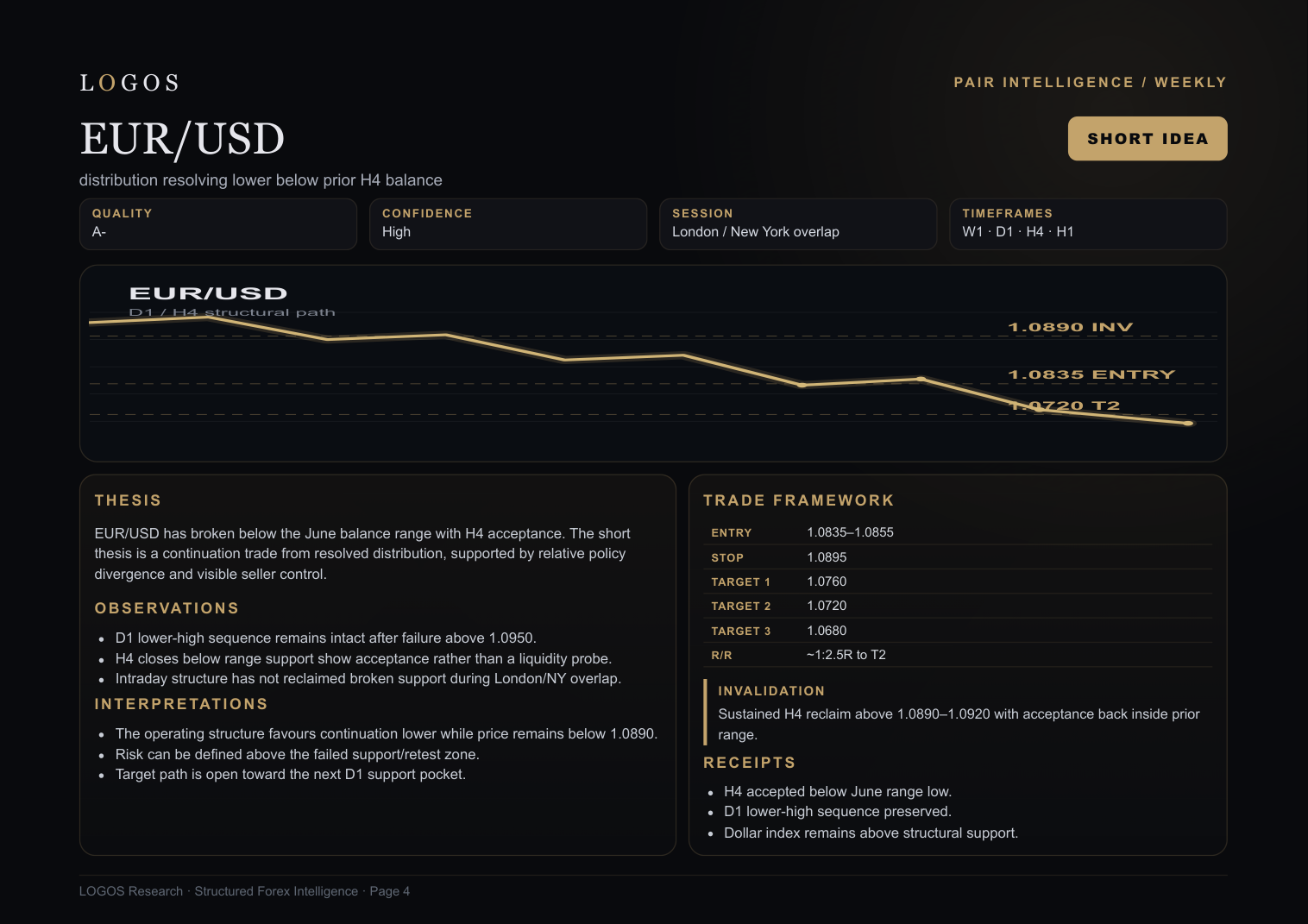
A directional view is only the beginning. LOGOS preserves the support, contradiction, governing conditions and eventual review as one connected research object.
State what the evidence supports—and the market structure beneath it.
Preserve the primary path beside the credible alternative.
Show what argues against the preferred interpretation.
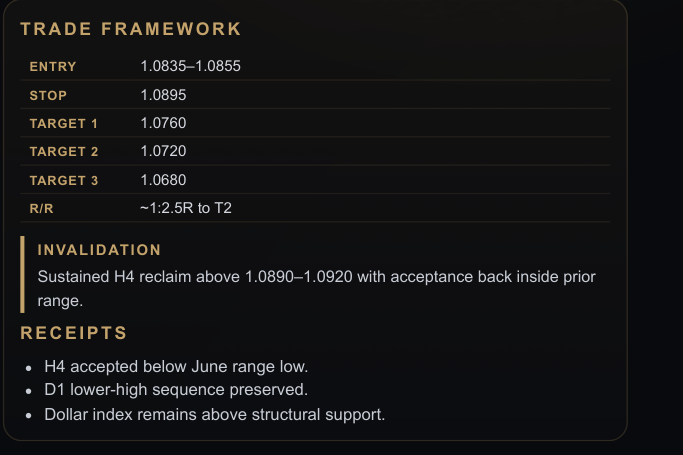
Define the condition that makes the thesis unfit before authority is considered.
Record entry context, risk references and scenario objectives without manufacturing certainty.
Return later to compare what was expected with what actually followed.
The report remains useful because its conclusion is surrounded by the evidence required to question it.
Executive context, pair-level reasoning, trade framing and chart evidence remain connected rather than being reduced to an isolated alert.
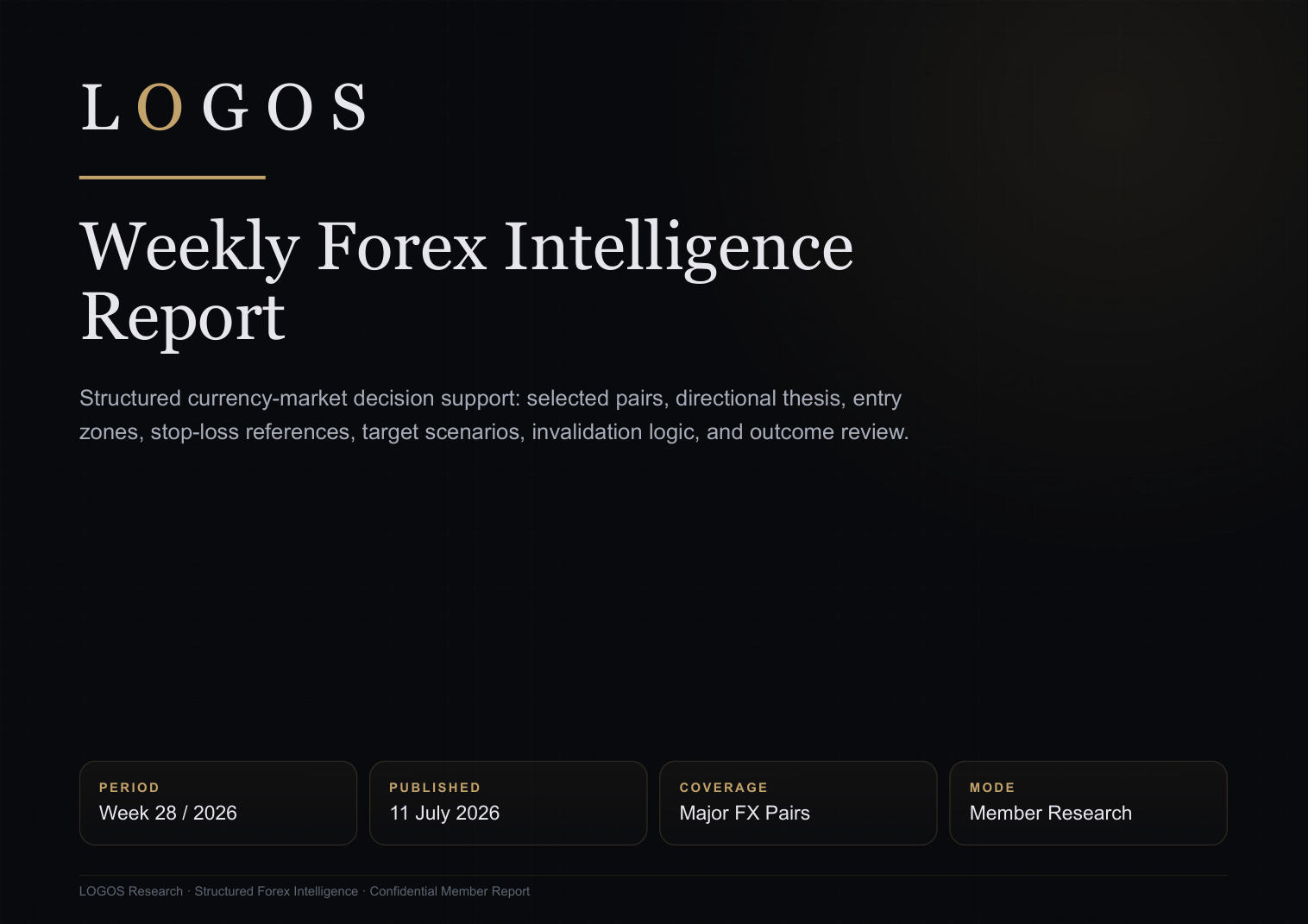
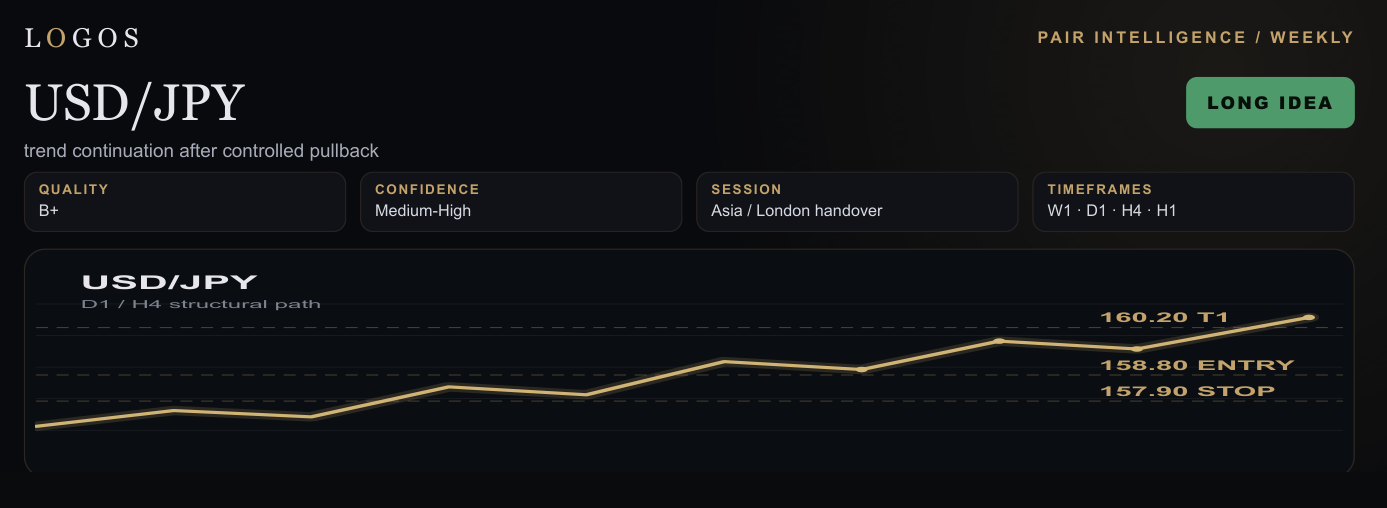
LOGOS begins with ten foreign-exchange pairs and studies them across five connected timeframes. Focus makes comparison possible; repetition makes review meaningful.
Each report preserves the analytical state before hindsight arrives. The archive makes later review possible without allowing the original thesis to be quietly repaired.
Market context sealed
PRESERVEDPrimary and alternate paths preserved
PRESERVEDTRADE · NO_TRADE · SAFE_FAILURE
PRESERVEDObserved result linked to original state
PRESERVEDLearning returned to the method
REVIEWEDLOGOS provides market research and decision-support intelligence. It does not provide personal financial advice, guaranteed outcomes or live broker execution. All operating evidence presently described is paper simulated and human supervised.
Follow the method that produces the briefing, or request access to the private member environment.